Never Too Late for the Game
How In Vivo CAR-T Is Rewriting the Rules of Cell Therapy Competition
The CAR-T market is beginning to sense a new wave—one that may shift the competitive tide of the industry. While the first breakthrough CAR-T therapies emerged through ex vivo approaches, recent pharmaceutical M&A activity suggests growing confidence in the long-term potential of in vivo platforms. This transition has introduced a new competitive dynamic: companies that arrived late to the ex vivo race are now positioning themselves aggressively within the emerging in vivo landscape. Firms such as AbbVie may have missed the initial ex vivo wave, but are now rapidly assembling the technological and strategic capabilities needed to compete in what could become the next major phase of CAR-T therapy development.
Unlike the previous wave of ex vivo CAR-T expansion, the emerging in vivo market has prompted pharmaceutical companies to deploy acquisition capital much earlier in the clinical development cycle. This marks a notable departure from the ex vivo era, during which major acquisitions were typically concentrated around therapies approaching FDA approval or commercial-scale deployment. Since 2024, the in vivo CAR-T landscape has entered a rapid acceleration phase characterized by partnerships, platform acquisitions, and strategic licensing agreements among major pharmaceutical companies.
Ex Vivo
Acquisition activity concentrated around near-commercial or FDA-ready assets.
Year
2012
2017
2018
2019
Strategic Entrants
Novartis
Johnson & Johnson
Gilead Science
Celgene
Bristol Myers Squibb
Defining Transactions
—
Commercial/Research Partnership with University of Pennsylvania
$1.7 Billion
Licensing Agreement with Legend
$11.9 Billion
Acquisition of Kite Pharma
$10.4 Billion
Acquisition of Juno Therapeutics
$80 Billion
Acquisition of Celgene
In Vivo
Acquisition activity concentrated around Phase 1 and platform-stage assets.
Year
2025
2026
Strategic Entrants
Gilead Science/Kite
AstraZeneca
AbbVie
Eli Lilly & Company
Defining Transactions
$350 Million
Acquisition of Interius BioTherapeutics
$1 Billion
Acquisition of EsoBiotec
$2.1 Billion
Acquisition of Capstan Therapeutics
$2.4 Billion
Orna Therapeutics
$7 Billion
Kelonia Therapeutics
Industrializing Complexity
“Given that a chain is as strong as only its weakest link, documenting the chain of custody necessitates that all processes be given equal weight with regard to collecting and documenting accurate and complete data. A loss of documentation at any point renders the entire chain inadequate.” 1
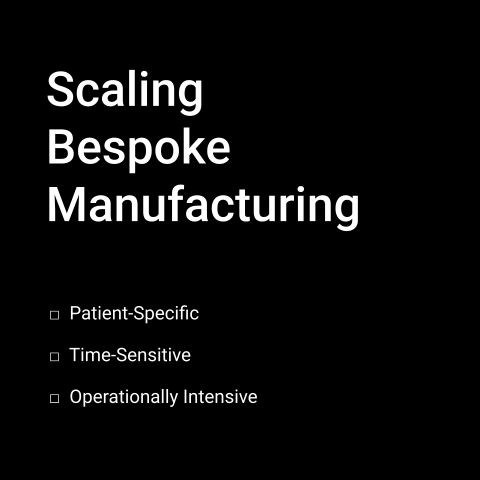
Currently approved ex vivo CAR-T therapies are predominantly autologous, delivering patient-specific solutions: a trait that requires complex coordination across healthcare institutions, logistics networks, and GMP facilities. Vein-to-vein tracking requires individual patients’ unique T-cells to be collected, engineered, transported, and re-infused back to the patient within tightly controlled time constraints and a precisely controlled environment.
As a result, the scalability of ex vivo CAR-T depends as much on operational coordination as on biological efficacy.
Engineering Scalability
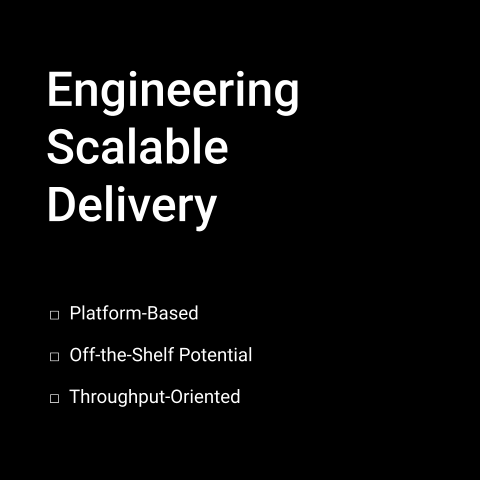
In vivo CAR-T therapies deliver CAR-encoding genetic material directly into the patient’s bloodstream, genetically modifying T-cells in situ. Whereas ex vivo therapies require intricate and tightly controlled production, logistics, and treatment workflows, in vivo approaches focus on engineering the delivery systems capable of programming patients’ immune cells directly within the body—eliminating the need for extraction, external modification, propagation, and reinfusion.
As a result, the competitive race increasingly centers on developing scalable delivery platforms and reusable engineering architectures rather than operationalizing bespoke manufacturing workflows. In this model, the strategic value of in vivo CAR-T may reside not only in a singular therapeutic product, but in the adaptability and scalability of the underlying platform itself.
Whether in vivo CAR-T ultimately fulfills its long-term promise remains uncertain. What is increasingly clear, however, is that the industry is beginning to reorganize itself around a different set of assumptions—about manufacturing, scalability, logistics, and care delivery. The transition may ultimately prove less about replacing ex vivo therapies altogether and more about redistributing where complexity, capital, and competitive advantage reside.